Bariatric surgery: is it the answer? Many people who live with obesity and struggle to lose weight eventually turn to one of the different types of bariatric (weight-loss) surgery. Besides helping with weight loss, these operations improve metabolic health, and as a result they are very effective at improving quality of life for people with diabetes, high blood pressure, sleep apnea, high cholesterol and many other obesity-related conditions.[9]
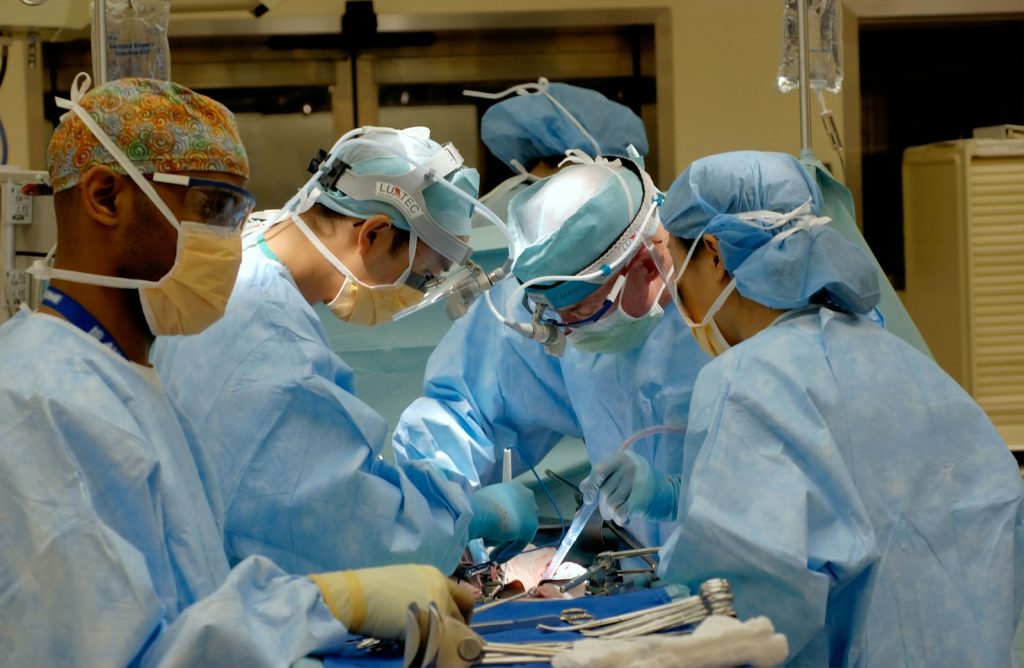
Bariatric surgery is constantly evolving, with modern, minimally invasive techniques being introduced through laparoscopic (keyhole) surgery, so patients get a better surgical experience with less pain, fewer complications and faster recovery.[9] Most operations are now done laparoscopically, without the need for many surgical incisions.[10]
Bariatric surgery aims to modify the stomach and intestines, either by making the stomach smaller or by bypassing parts of the intestine. This leads to:[9]
- Eating less food to feel full.
- Changes in how the body absorbs nutrients.
- Reduced appetite and less hunger.
- A better ability to reach a healthy weight and a healthy life.
Types of bariatric surgery
There are many types of bariatric surgery. Here are the best-known ones, along with the advantages of each:
Laparoscopic gastric banding ( Gastric band)
In this operation, a band (which can be adjusted by tightening or loosening after surgery) is placed around the top of the stomach, creating a small pouch that collects the food you eat,[2] which:
- Limits how much food you can eat.[2]
- Makes you feel full after eating a small amount of food.[2]
- Lets food empty slowly from the upper stomach pouch into the lower part of the stomach.[2]
- Means fewer nutrients are absorbed from food, which requires taking some supplements and having regular check-up tests.[3]
Gastric bypass surgery (Gastric bypass surgery)
This operation is based on creating a small pouch at the top of the stomach using very small staples, which is then connected to the small intestine.[1]
When you eat, food passes directly into the small intestine, bypassing a very large part of the stomach,[1] and the operation lets stomach acids mix with the digestive enzymes secreted by the small intestine,[4] which results in:[1]
- Eating less food.
- Feeling full sooner.
- Absorbing fewer calories from the food you eat.
- Changes in gut hormones that help reduce appetite hormones and keep you feeling full for longer.[4]
- Faster weight loss in the short term, allowing loss of 60–80% of excess weight.[4]
Gastric sleeve surgery (Sleeve gastrectomy)
In this operation, a large part of the stomach is removed so that it becomes much smaller than before (shaped like a long, narrow tube connected directly to the small intestine), which:[1]
- Means you can’t eat a lot of food.[1]
- Makes you feel full sooner after eating a small amount of food.[1]
- Allows loss of 60% of excess weight in about two years.
- Improves and resolves obesity-related medical problems, such as heart disease, high blood pressure, diabetes and many others.[5]
Gastric balloon (Intra-gastric balloon)
This is a temporary procedure that lasts only 6 months. A small balloon filled with saline or air is placed inside the stomach, passed through a thin tube down the throat,[1] which means:
- You don’t need to eat as much food to feel full.
- Weight loss reaches about 7–15% of body weight in the first six months, with an overall rate of about 30–47%.[6]
This procedure requires sticking to a diet along with regular exercise to ensure long-term success.[6]
Biliopancreatic diversion (Biliopancreatic diversion)
In this operation, parts of the stomach are removed, and the remaining stomach tube is then connected to the end of the small intestine near the large intestine. As a result, most calories and nutrients are routed directly to the colon (part of the large intestine), where they are not absorbed,[7]
This is one of the least common bariatric operations because of its complications, [1] which include:[8]
- Leaks in the digestive tract.
- Diarrhea, nausea and vomiting.
- Gallstones.
- Stomach perforation.
- Stomach ulcers.
- Malnutrition.
- Blood clots.
Comparing types of bariatric surgery: which is best?
- Gastric sleeve and gastric bypass surgery are better than gastric banding in terms of how quickly you lose weight.[1]
- Complications with these two operations are higher compared with gastric banding, which has fewer complications.[1]
- Gastric banding can be reversed if it causes problems or complications, while the other operations cannot be reversed once performed.[1]
- The long-term complication rate for gastric bypass is slightly higher than for gastric sleeve surgery, and complications can be avoided by following your doctor’s instructions and receiving proper care.[4]
How to prepare for bariatric surgery
Before having bariatric surgery, you need to be mentally and physically prepared for the challenges ahead. Your medical team will tell you that:[10]
- You need to become more active by following an exercise routine after surgery.
- You must stop smoking at least 6 weeks before surgery.
- You need to adopt a healthy eating plan to make sure the operation doesn’t fail in its goal of weight loss.
Sources:
1.https://www.nhs.uk/conditions/weight-loss-surgery/types/
2.https://medlineplus.gov/ency/article/007388.htm
5.https://www.mayoclinic.org/tests-procedures/sleeve-gastrectomy/about/pac-20385183
6.https://www.mayoclinic.org/tests-procedures/intragastric-balloon/about/pac-20394435
7.https://medlineplus.gov/ency/imagepages/19499.htm
9.https://www.niddk.nih.gov/health-information/weight-management/bariatric-surgery/types