
Advanced Laparoscopic Surgery
Complex operations performed through small openings using a high-definition camera and precision instruments, instead of large incisions. The result: less pain, faster recovery and barely noticeable scars.
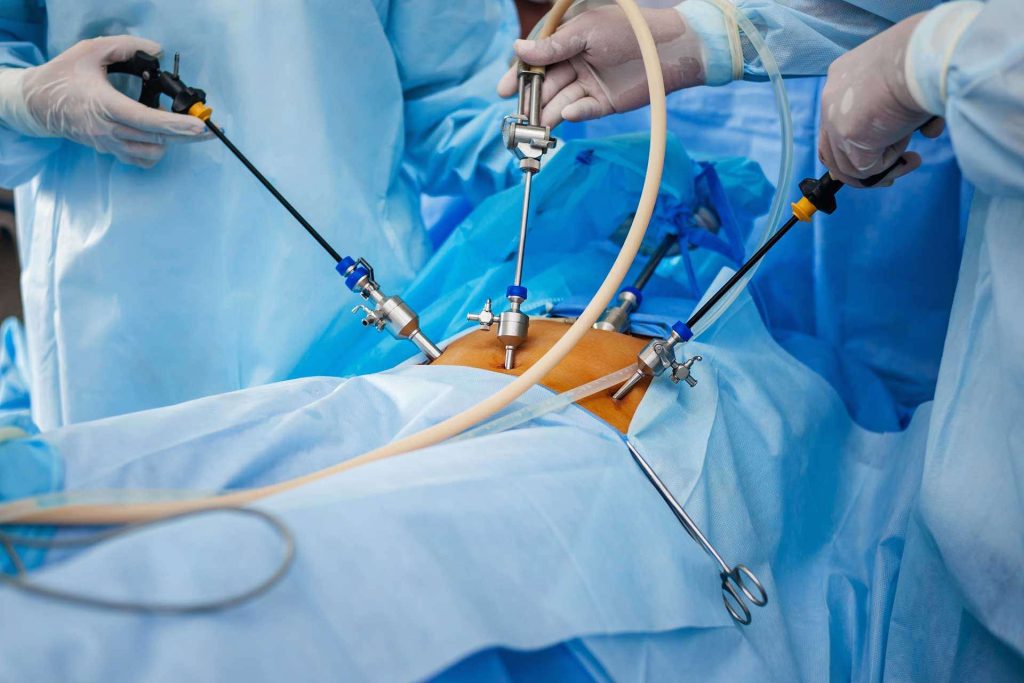
Why Laparoscopic Surgery?
Less Pain
Small incisions and less tissue damage mean less need for painkillers.
Faster Recovery
Walking the same day, earlier hospital discharge, and a quicker return to work.
Fewer Complications
Fewer wound infections and incisional hernias compared with open surgery.
Greater Precision
A magnified, clear view lets the surgeon work precisely in tight spaces.
Cosmetic Results
Small scars that become barely noticeable over time.
Fewer Adhesions
Less internal scar tissue (adhesions) forms after surgery.

Laparoscopic Procedures We Perform
Gastric Sleeve →
Including the two-port sleeve technique for suitable candidates.
Gastric Bypass →
The classic Roux-en-Y bypass to treat obesity, diabetes, and reflux.
Mini Gastric Bypass →
A single connection with powerful weight-loss results.
Gallbladder Removal →
The standard treatment for symptomatic gallstones.
Hernia Repair (All Types) →
Inguinal, umbilical, and incisional hernias, repaired laparoscopically with mesh.
Acid Reflux (GERD) →
Fundoplication and hiatal hernia repair.
Appendectomy →
Fast, safe removal in emergency cases.
Colon Tumors →
Laparoscopic colectomy with lymph node removal.
Splenectomy →
For blood disorders and an enlarged spleen in selected cases.
Is laparoscopic surgery suitable for every patient?
Most abdominal operations today can be performed laparoscopically, but the decision depends on several factors:
- Previous abdominal surgery and adhesions.
- The severity of inflammation or the size of the tumor.
- Overall health and the ability to tolerate anesthesia.
- Emergency situations and the patient’s stability.
In a small percentage of cases, the surgeon may decide during the operation to convert to open surgery to keep the patient safe. This decision is part of safe practice, not a complication.
FAQs
For most procedures, laparoscopy is associated with less pain, faster recovery and fewer wound complications, but every operation carries risks that the surgeon discusses with the patient.
Yes, most laparoscopic abdominal operations are performed under general anesthesia.
It is caused by the carbon dioxide gas used to inflate the abdomen during surgery, and it usually resolves within two to three days.
It depends on the procedure, but most patients return to light activities within a few days to two weeks.
Medical Sources
The information on this page is for health education only and does not replace a consultation with your doctor. Last medical review: November 2026 — Dr. Hasan Jalamneh, Consultant in General & Laparoscopic Surgery.
Looking for surgery with less pain and a faster recovery?
Book a consultation with Dr. Hasan Jalamneh to find out whether laparoscopic surgery is right for you.